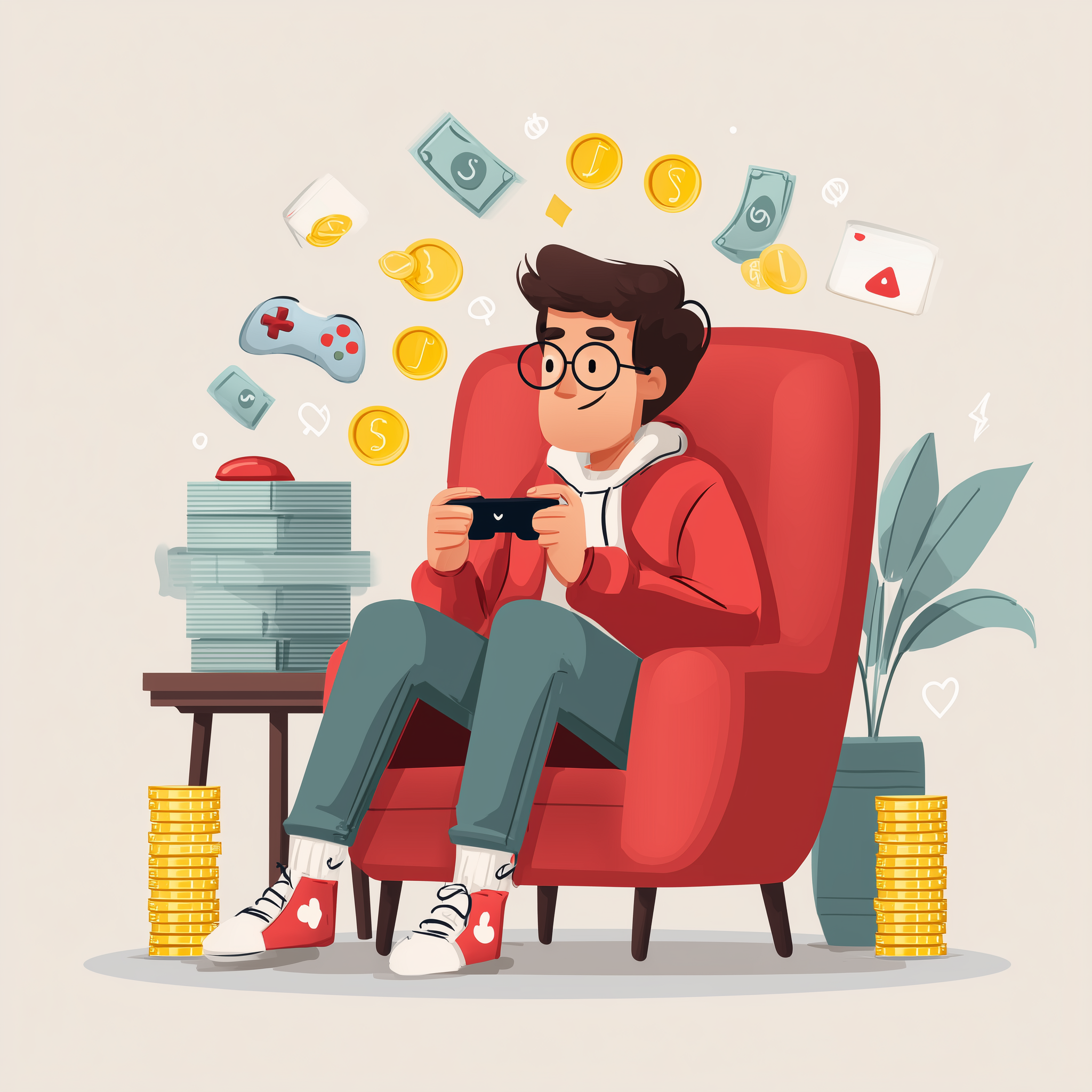
In modern game development, monetization is no longer a separate commercial layer placed on top of gameplay after the core systems are finished. In many genres, especially live-service, mobile, free-to-play, and multiplayer titles, monetization is deeply connected to the structure of the game itself. At the center of this connection stands the in-game economy. It shapes how players earn, spend, save, upgrade, unlock, and progress. More importantly, it influences whether players feel motivated to stay in the game over time or whether they begin to feel manipulated, exhausted, or excluded.
An in-game economy is not only about premium currency or item pricing. It is the broader system that governs value inside the game world. This includes soft currencies, hard currencies, rewards, sinks, progression pacing, item scarcity, crafting resources, upgrade loops, seasonal rewards, cosmetic systems, and the overall logic of exchange. When these elements are well designed, they create a sense of momentum and fairness that keeps players engaged. When they are poorly designed, they can damage both retention and revenue, even if short-term monetization appears strong.
This is why the in-game economy plays such a critical role in long-term retention and monetization balance. It is one of the few systems that directly affects both player psychology and business performance at the same time.
Why Retention Depends on Economic Structure
Players do not remain in a game simply because the mechanics are enjoyable in the first session. Long-term retention depends on whether the game continues to provide meaningful goals, a satisfying pace of reward, and a sense that effort leads to value. The in-game economy is what organizes these experiences over time.
If players earn rewards too slowly, the game begins to feel punishing or repetitive. If rewards come too quickly, the sense of achievement can collapse, and the progression loop may lose tension. If premium purchases provide overwhelming advantages, non-paying players may lose motivation and leave. If progression systems are too generous without enough sinks or scarcity, the economy can lose meaning altogether. Retention suffers in all of these cases because the player no longer feels that the game world has a healthy internal rhythm.
A strong economy supports retention by creating consistent motivation. It gives players short-term goals, such as earning enough currency for an upgrade, while also supporting medium- and long-term ambitions, such as completing collections, unlocking higher-value content, or participating in seasonal progression. This layered sense of value helps players build routines. They return not only for gameplay, but because the game’s economy makes continued participation feel worthwhile.
This is especially important in live-service games. When a title is expected to keep players engaged for months or years, the economy becomes part of the content strategy. It determines how events feel, how seasonal systems function, how progression resets are handled, and how limited-time incentives interact with player trust. In such games, the economy is not a background mechanism. It is one of the main engines of ongoing engagement.
The Link Between Economy Design and Monetization Balance
Good monetization is often described as the ability to earn revenue without damaging player experience. In practice, this balance is difficult to achieve because monetization always introduces tension into the economy. Developers want players to see reasons to spend, but they also need the broader player base to feel respected and fairly treated. The in-game economy is where this tension becomes visible.
If monetization is too aggressive, the economy starts to feel distorted. Players begin to notice that systems are designed less around fun and more around pressure. Resource scarcity becomes artificial. Grind becomes excessive. Premium shortcuts become too attractive or too necessary. Instead of feeling invited to spend, players feel cornered into spending. This may increase short-term revenue from a small segment of users, but it often reduces trust and weakens long-term retention.
On the other hand, if monetization is too disconnected from the economy, spending loses purpose. Premium content may feel irrelevant, cosmetic systems may lack perceived value, or progression boosts may not align with actual player needs. In this case, the game may retain players reasonably well but fail to generate sustainable revenue.
The most effective in-game economies create monetization opportunities that feel coherent with the player experience. Spending should enhance participation, personalization, convenience, or optional progression rather than replace the meaning of play. In healthy systems, the economy makes monetization visible but not oppressive. Players should feel that spending is one way to engage with the game, not the only way to enjoy it.
This is one reason cosmetic monetization has become so important in many successful games. Cosmetics allow players to express identity and status without directly breaking competitive balance. But even cosmetic systems depend on economic design. Their rarity, rotation, pricing, and connection to progression all influence whether players see them as desirable, fair, and worth purchasing.
Scarcity, Reward Loops, and Player Trust
At the heart of every in-game economy lies the management of scarcity. Value exists because not everything is available immediately. Players pursue items, upgrades, or rewards because those things require time, skill, luck, or strategic choice. Scarcity, however, must be handled carefully. If everything feels too easy to obtain, the economy becomes flat. If everything feels artificially restricted, frustration replaces motivation.
The key difference lies in whether scarcity feels meaningful or manipulative. Meaningful scarcity supports long-term goals and makes choices matter. Manipulative scarcity exists mainly to push spending by creating unnecessary pain points. Players are highly sensitive to this difference, even if they do not always describe it in economic terms.
Reward loops are equally important. Games rely on cycles of action and reward, but not all rewards carry the same value. A well-designed economy understands which rewards support excitement, which support habit, and which support aspiration. Daily rewards may encourage routine. Event rewards may create urgency. Long-term collection systems may support mastery or identity. Premium rewards may create optional prestige or convenience. The economy must connect these layers in a way that feels structured rather than chaotic.
Player trust is the element that holds all of this together. Once players believe the economy is dishonest, long-term retention becomes much harder to sustain. Trust is damaged when progression is slowed too aggressively after early onboarding, when premium systems suddenly shift in value, when currencies become confusing, or when events feel designed mainly to extract spending. A game may survive these mistakes temporarily, but the cost usually appears later through reduced loyalty, weaker engagement, or community backlash.
For this reason, economy design must be treated not only as a mathematical exercise, but as a relationship system. It defines how the game communicates value to its players. Every reward rate, pricing decision, sink, and premium offer tells the player something about what kind of relationship the game wants to build with them.
Economy Design as a Long-Term Live Operations Tool
In games with long life cycles, the economy is never fully finished. It must be monitored, adjusted, and rebalanced as player behavior evolves. New content changes demand patterns. New systems create unexpected imbalances. Veteran players accumulate resources differently from new players. Limited-time events can inflate or disrupt value. Live operations teams therefore rely on economy design as an ongoing strategic tool rather than a one-time setup.
This is where analytics becomes essential. Developers need to understand not only what players buy, but how economic behavior connects to retention. Which users churn after hitting progression walls? Which rewards create return behavior? Which premium offers are seen as helpful rather than predatory? Which currencies are hoarded, ignored, or misunderstood? The answers to these questions shape whether monetization and retention can grow together or begin to conflict.
A mature economy also needs flexibility. It should support onboarding for new players, progression depth for engaged players, and monetization paths for spenders without allowing one group to destroy the experience of another. This balance is difficult, but it is one of the clearest marks of high-quality live-service design.
Conclusion
The role of the in-game economy in long-term retention and monetization balance is fundamental because it shapes the way players experience value over time. It influences whether progress feels rewarding, whether spending feels fair, and whether the game world maintains meaning across weeks, months, and seasons.
A strong economy does more than generate revenue. It builds rhythm, motivation, trust, and continuity. It gives players reasons to stay while creating monetization opportunities that do not undermine the core experience. A weak economy, by contrast, can make even a well-designed game feel exhausting, unfair, or hollow.
For modern game developers, this means in-game economy design should never be treated as a secondary commercial layer. It is a central system that connects player satisfaction with business sustainability. When designed carefully, it becomes one of the most powerful tools for keeping a game alive, profitable, and trusted over the long term.